Suddenly, there you are face-to-face with the animal encounter of your dreams. The light is perfect, your heart is racing, and a majestic creature is unfolding its wings or sprinting across the plains right in front of you.
But as any nature photographer knows, the wild is beautifully unpredictable. Opportunities are fast and fleeting, and a single incorrect toggle can mean the difference between a tack-sharp, award-winning portrait and a blurry, heartbreaking miss. If you have ever felt overwhelmed trying to balance shutter speed, aperture, and ISO while tracking a fast-moving subject, you are not alone.
Mastering the exposure triangle for wildlife photography isn’t about memorizing complex math; it’s about making your camera an extension of your instinct. To capture the true essence of nature, your priority must always be to freeze the action while keeping digital noise at bay. Of course, none of this is possible without the right gear in your hands — if you’re just starting out, exploring the best wildlife cameras for beginners can help you find a body that supports the fast autofocus and flexible ISO performance these settings demand.
Whether you are trying to isolate a songbird with a buttery, blurred background (bokeh), freeze a predator mid-chase, or configure the perfect continuous autofocus (AF-C / AI-Servo) tracking system, having a reliable baseline is everything. And if budget is a concern, choosing the right camera for wildlife photography doesn’t have to break the bank — there are excellent options that still deliver the speed and image quality needed in the field.
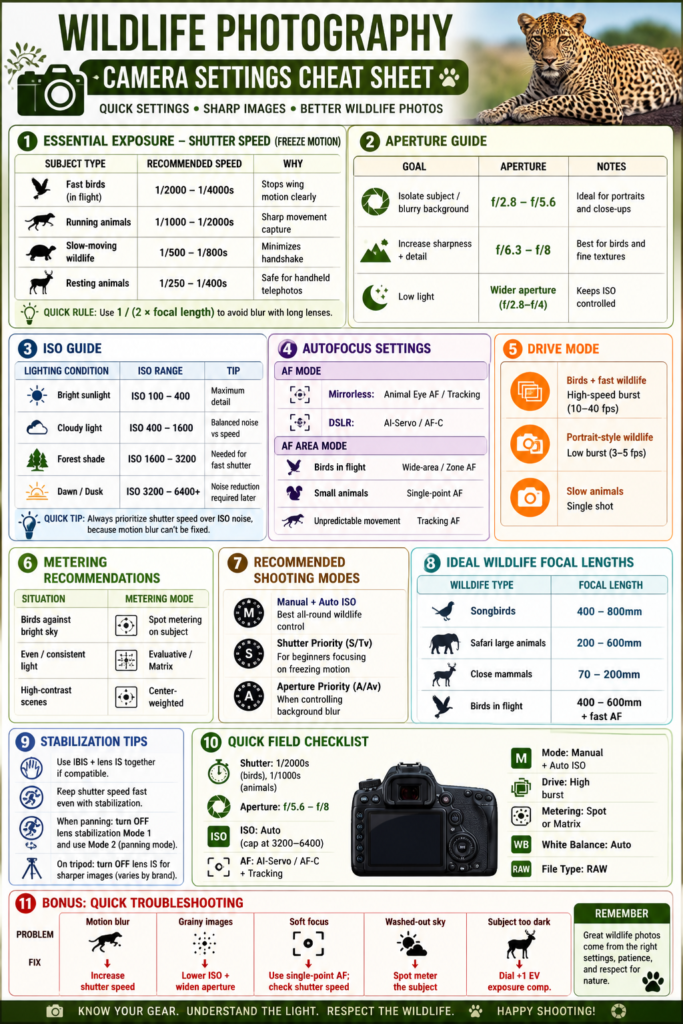
This Wildlife Photography Camera Settings Cheat Sheet is designed to take the guesswork out of the field. From exact shutter speed recommendations for birds in flight to troubleshooting tricky lighting at dawn or dusk, this field-ready guide will help you dial in the perfect setup instantly—so you can stop fiddling with menus and start capturing the shot.
1. Essential Exposure Settings
Shutter Speed (Freeze Motion)
Subject Type
Recommended Speed
Why
Fast birds (in flight)
1/2000–1/4000s
Stops wing motion clearly
Running animals
1/1000–1/2000s
Sharp movement capture
Slow-moving wildlife
1/500–1/800s
Minimizes handshake
Resting animals
1/250–1/400s
Safe for handheld telephotos
Quick Rule: Use 1 / (2×focal length) to avoid blur with long lenses.